🧠 Can AI Predict If Your Antidepressant Will Work?

Researchers at IIT Madras and the Czech Academy of Sciences trained AI on EEG brain data from the first week of antidepressant treatment and predicted treatment success with 73% accuracy. This could drastically reduce trial-and-error in psychiatric treatment.
Study Outline
| Aspect | Details |
|---|---|
| Study Focus | EEG brain signals to predict antidepressant response |
| Conducted By | IIT Madras & Czech Academy of Sciences |
| Sample Size | 176 patients diagnosed with severe depression |
| Data Used | EEG signals during first week of treatment |
| ML Techniques | Signal preprocessing + classification models |
Why this research matters
Depression is a serious illness, and finding the right treatment often feels like trial and error — it can take weeks or even months to know if a medicine is working. During that time, patients may continue to suffer, lose hope, or give up on treatment altogether. This study is important because it shows how brain signals (collected painlessly through EEG) might help doctors use AI to predict early on if a treatment will work. That means faster help, less emotional stress, and more personalized care — something every patient deserves.
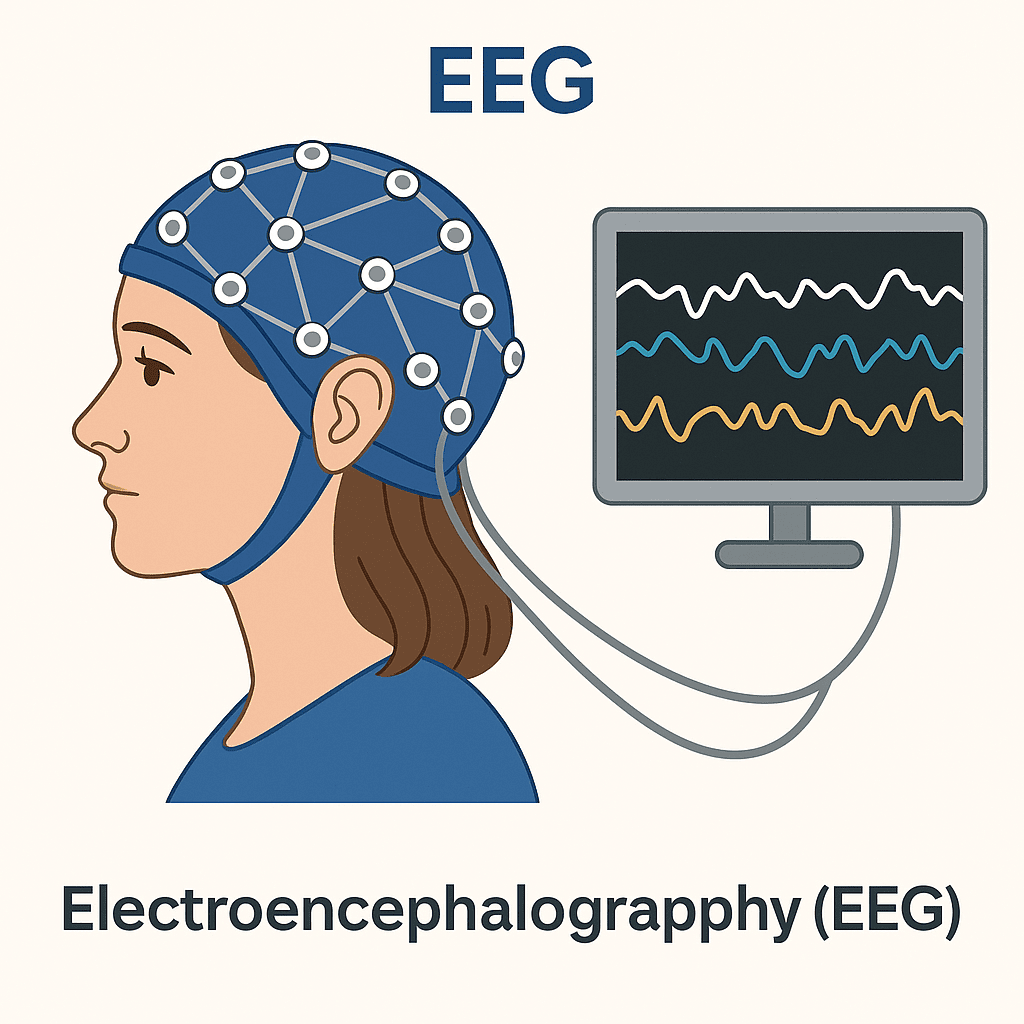
What is EEG?
Electroencephalography (EEG) is a technique used to record electrical activity in the brain using sensors placed on the scalp. It’s completely non-invasive and helps doctors understand how different parts of the brain are working. EEG is commonly used in diagnosing conditions like epilepsy, sleep disorders, and now — thanks to AI — it’s showing promise in predicting mental health treatment outcomes too.
Real-World Implications
- Faster treatment decisions: Reduces time lost in ineffective treatment cycles.
- Personalized psychiatry: Every brain responds differently. AI helps account for that.
- Less emotional burden: Patients can start feeling better sooner.
- Scalable tool: EEG is non-invasive and widely accessible in hospitals.
Limitations & Considerations
- Sample size (176) is promising but not large enough for deployment.
- Requires broader validation across demographics.
- Ethical handling of prediction outcomes is crucial — AI should assist, not replace human clinicians.
Summary
This study marks a meaningful step toward AI-powered mental health care. While not yet ready for clinical rollout, the idea that brain activity can guide treatment using AI within just a week is powerful.
Expect more such diagnostic breakthroughs in the coming years — combining signal science, psychology, and machine learning.
Sources
- Times of India coverage: TOI Article
- Academic Paper: Biomedical Signal Processing and Control Journal (2025)
Earning Opportunity with AI
If this article helped you,
☕ Buy me a coffee
Your support keeps more things coming!
Disclaimer
This article summarizes findings from real peer-reviewed research. This content is intended for educational and informational purposes only.